
Saliva as a lactate source: Can we get the same result without blood?
Blood lactate is the standard in endurance sport because it is reliable, well studied and already built into graded exercise testing. Its weaknesses are obvious: it is invasive, interrupts training and it costs per measurement. This is why researchers have been researching saliva as an alternative. If the same training-relevant information can be gained from sampling oral fluid, athletes could test themselves more often without extra personnel.
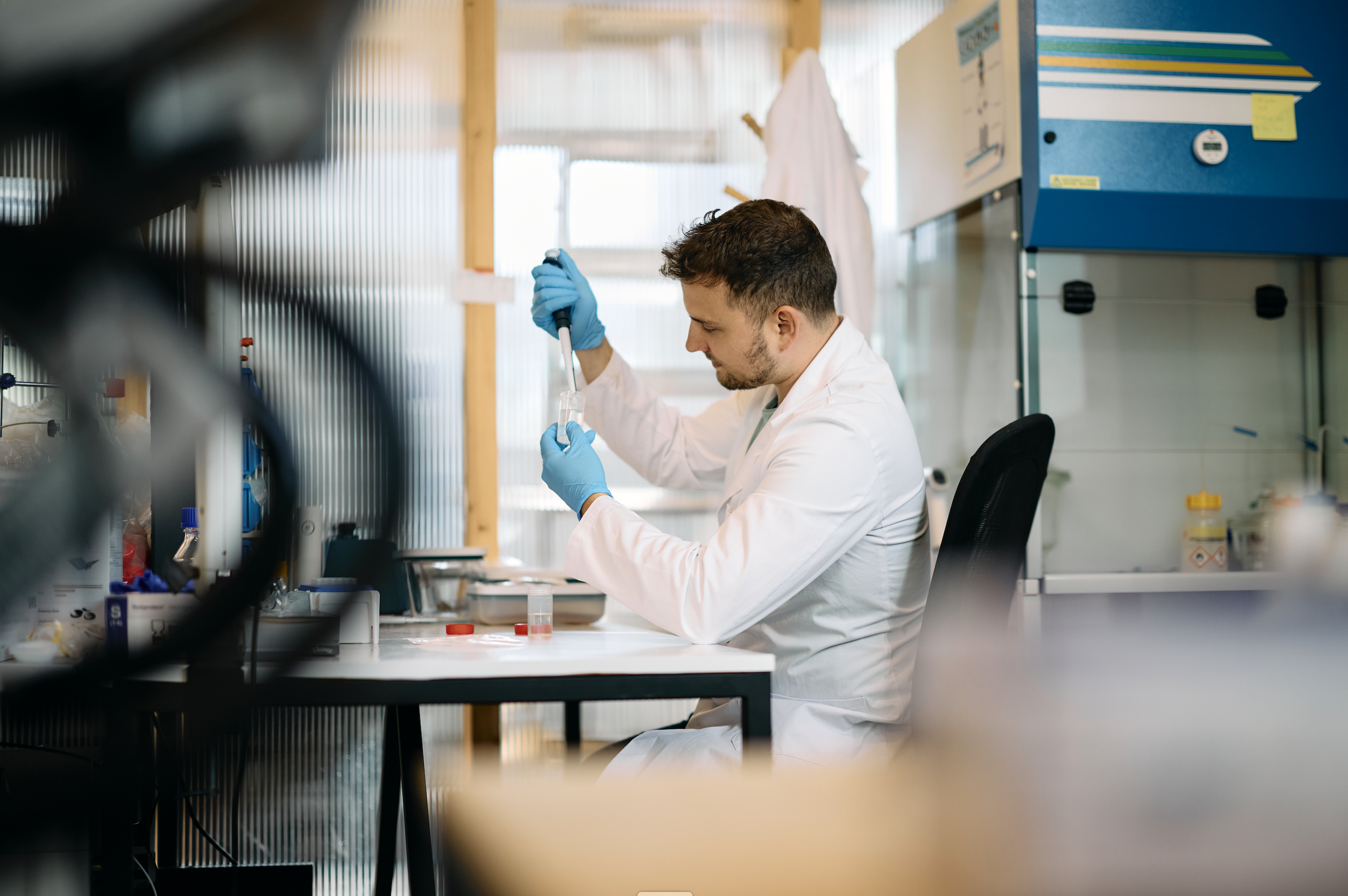
Research on salivary lactate
Physiologically the idea is clear. Salivary glands are permeable enough that lactate from the bloodstream can enter saliva by passive diffusion (Ohkuwa et al., 1995). When blood lactate rises during exercise, salivary lactate rises as well, typically with a delay and at a lower absolute concentration. Recent work has argued that, despite absolute values differing from blood lactate, the non-invasive collection could make salivary lactate suitable for exercise testing and metabolic monitoring (Yan et al., 2023).
How salivary lactate is different from blood
Compared with capillary blood, saliva has some practical differences. The rise in lactate is slightly slower because it must first move from blood into saliva and absolute concentrations are lower. To date, nearly all available studies have used single saliva samples collected and measured outside the mouth at defined times. There is currently no commercially available, in vivo sensor for continuous salivary lactate measurement (García-Guzmán et al., 2022).
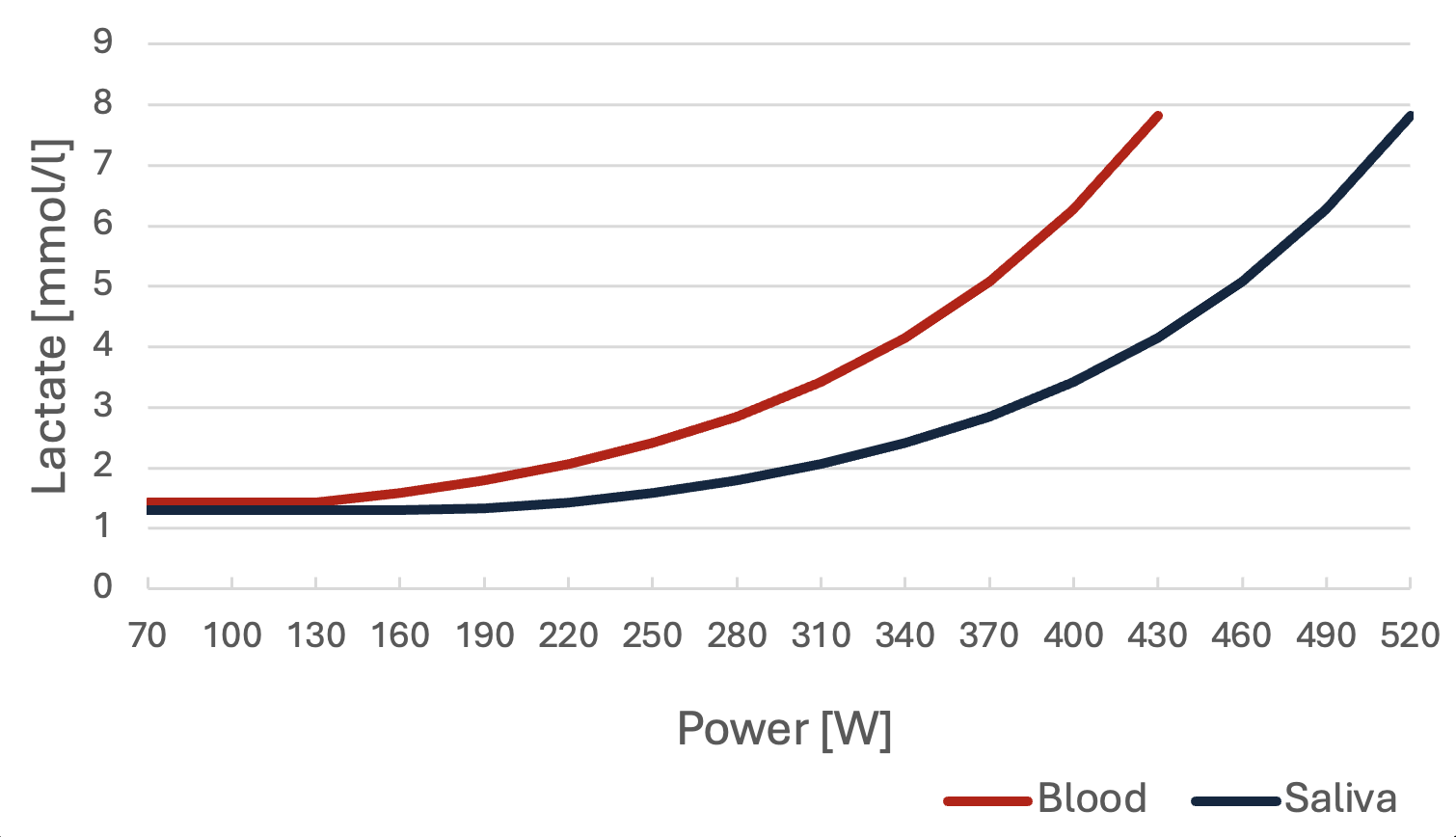
Given the unknowns regarding sensitivity to interfering agents such as sports drinks, recent food and heavy breathing), sampling must be standardised. In the future, salivary lactate could provide guidance similar to blood lactate. Supporting athletes to understand whether a session is primarily aerobic, whether intensity has crossed the second threshold, and whether repeated workouts are becoming metabolically easier.
Conclusion
Initial research has demonstrated the relationship between salivary and blood lactate across different studies and endurance sports. Further validation against the gold standard method needs to happen. Once thoroughly validated, saliva may become a practical alternative removing the main barriers of blood-based lactate testing.