
When ‘go by feel’ isn’t enough: Why endurance athletes measure lactate
‘Easy’ is vague. Many endurance athletes spend the majority of sessions at a medium-hard effort they call zone 2. Often this is too hard for real aerobic work and too easy to drive performance. Because formal tests happen only once or twice a year, most sessions run without a clear intensity check.
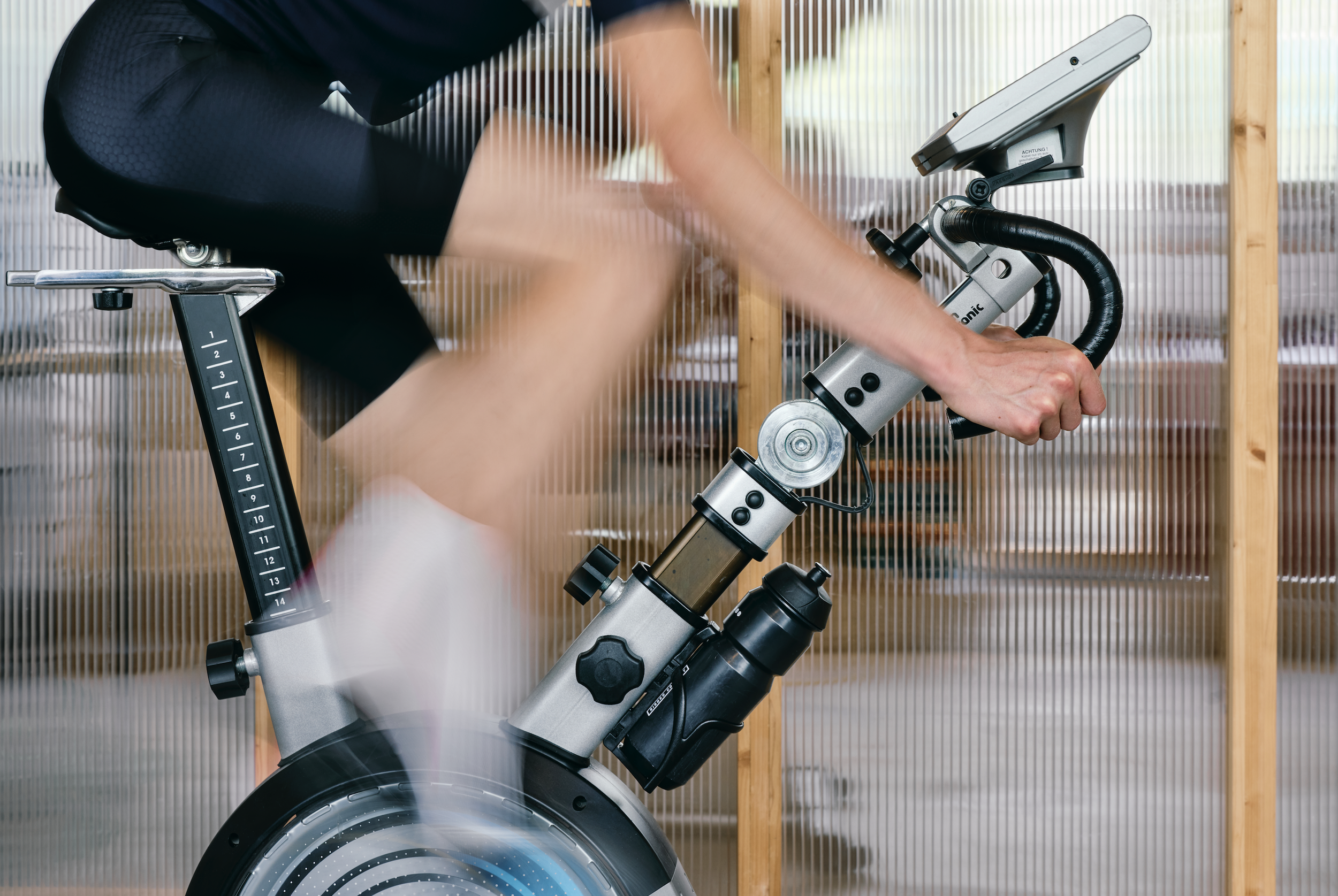
Lactate threshold 1 (LT1) vs lactate threshold 2 (LT2)
For endurance sports two points on the lactate curve are particularly important.
LT1 (first rise, IAS) marks the upper boundary of primarily aerobic work. This is where athletes should spend much of their training to build a strong aerobic base. Many athletes overshoot this threshold by roughly 10–20 W when relying on perceived exertion or heart rate alone, which can reduce the efficiency of base training.
LT2 (steeper rise, IANS) defines the highest intensity that can be sustained for limited durations, such as time trials, long climbs, or tempo runs. Small errors around LT2 are costly. Even a few watts too high can make the session overly fatiguing and hard to repeat, while a few watts too low may not provide the intended stimulus.
How lactate can be used to monitor improvement
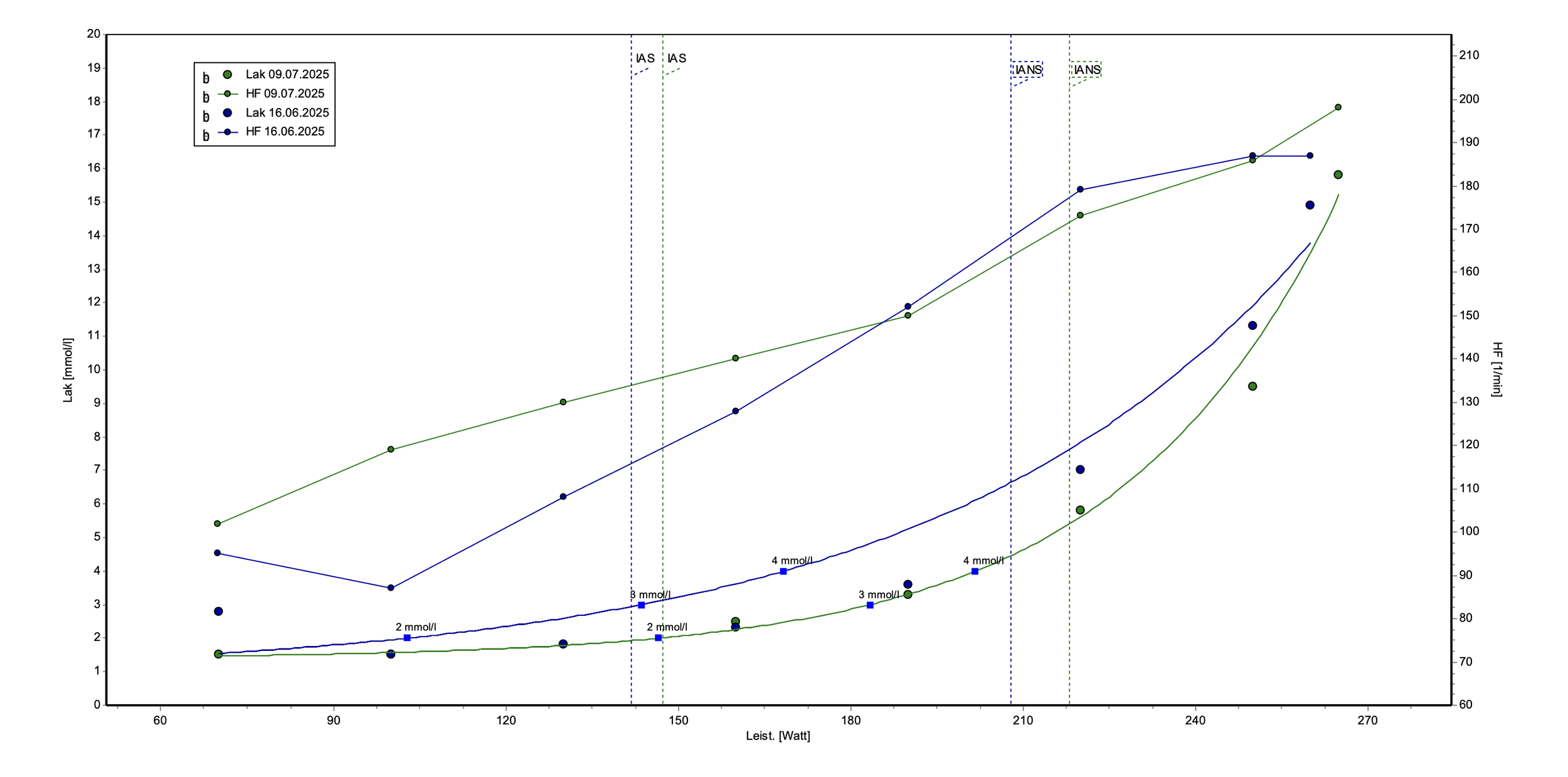
Repeated lactate testing can give insights into whether the same effort (power/pace) results in lower lactate production. To observe if a training block has shifted the thresholds, two graded exercise tests with lactate measurements can be conducted a few weeks/months apart.
Below an example to show the training effect on lactate curves. A clear shift of bot lactate threshold 1 (IAS) and lactate threshold 2 (IANS) to higher power can be observed. This shift is the effect of structured training.
Different use cases of lactate
Lactate is not needed for every training session. It is worth measuring when precision changes the outcome. Below some examples of sessions where it could be interesting to measure:
aerobic base sessions where you want to stay strictly below LT1 (develop aerobic capacity without unnecessary fatigue),
threshold blocks where you want to sit just under LT2,
return-to-training after illness, injury, or heavy fatigue, when internal load may be higher than expected and heart rate zones are no longer reliable.
Used that way, measuring lactate turns “I think this is the right effort” into “I know this was the right effort.”
The next article will introduce the concept of saliva as an alternative matrix to blood for lactate measurements in a sports setting.