
Finger pricks and graded exercise tests: The current standard for measuring lactate
Lactate measurements are already part of endurance sports, but they are used far less frequently than athletes train. Most athletes perform a lactate threshold test once or twice a year to determine their threshold-based heart rate zones and then structure their training around those zones. The current way of measuring lactate in capillary blood from finger or earlobe provides precise measurements, but it can be somewhat inconvenient for frequent testing.
Two main ways to measure blood lactate
Portable/field meters
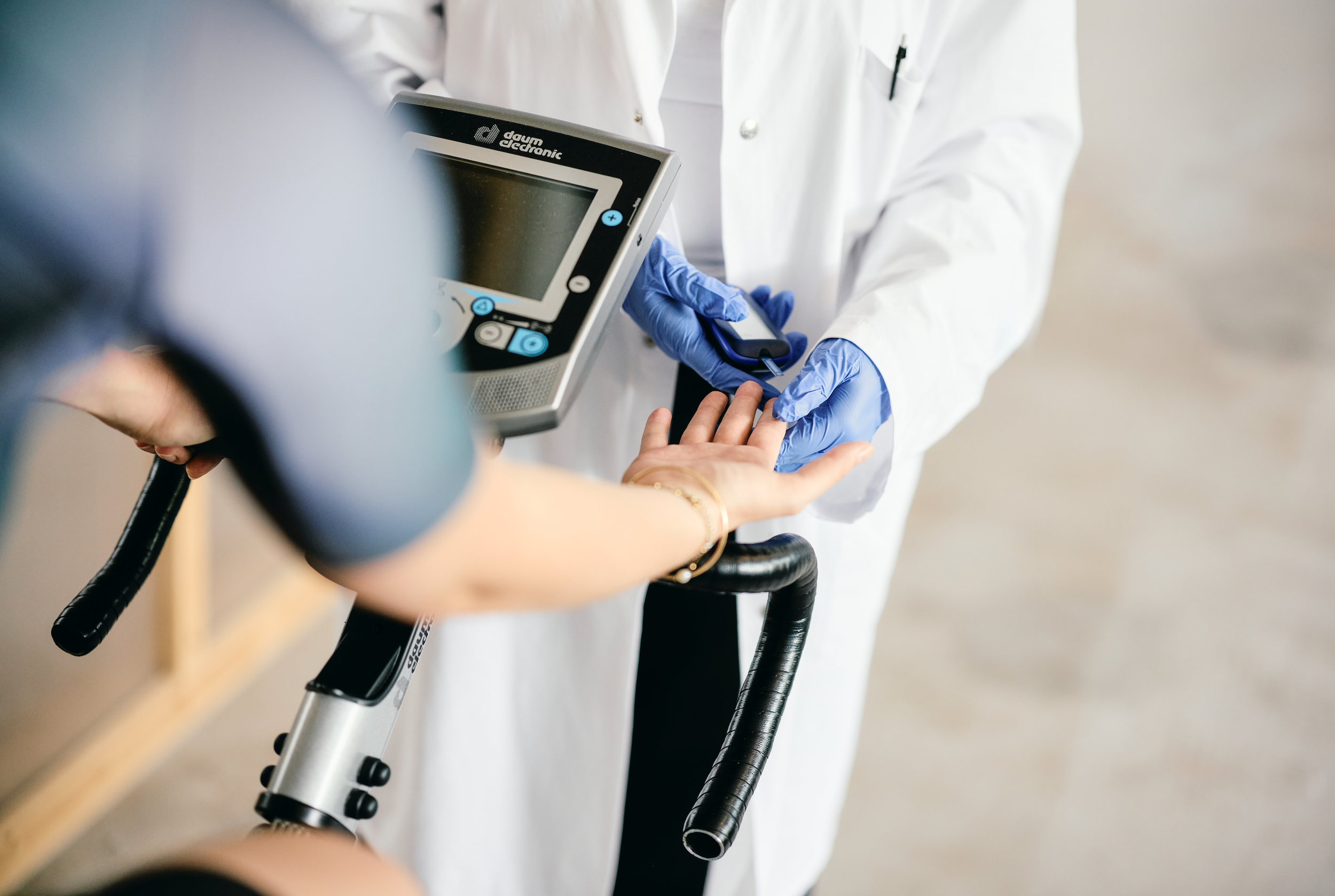
Devices such as Lactate Scout or Lactate Pro meters are small and portable devices that use disposable sensor strips for the determination of lactate in blood. Following disinfection of the finger/earlobe, the chosen site is pricked with a safety lancet, and a droplet of blood is used to obtain a lactate reading within a few seconds. Because these devices are portable, they can be used on ergometers and in the field alike.
Lab or bench analysers
Larger systems such as the Biosen (EKF Diagnostics) are the reference instruments usually used in performance labs and sports medicine centers. They require higher sample volumes, more handling steps, and need to be operated and maintained by trained staff. In return they provide high accuracy across a broad lactate range and result in reliable lactate–power/pace curves from which thresholds can be derived with confidence.
Why everyone trust blood (but won’t do it weekly)
Blood-based testing has clear advantages. It is the reference method for athletic performance monitoring. Portable lactate meters make it possible to measure lactate at home for tests or in the field to monitor key sessions. Devices used in laboratory testing sessions give the most reliable picture for planning a season.
The limits are just as clear. Capillary blood sampling requires hygienic and dry conditions. Outdoors, this is often difficult: sweat, rain or cold fingers make it harder and can skew results. Sensor strips come at a price and must be stored under controlled conditions. Every sample interrupts the session, and many athletes prefer someone else to do the handling and focus on their training/testing.
All these factors reduce the frequency of lactate testing. Most athletes described a typical pattern: 1–2 laboratory threshold tests per year for zone setting, plus the occasional field check when a coach is present.
Conclusion
Capillary blood is the working standard because it is trusted and well understood. Any new approach or sample matrix will have to show the same trends when compared to blood. At the same time, it needs to reduce costs, disruption or discomfort before athletes and coaches will use it more than a few times a year.